Thirukkural and Non-Violence of M. Gandhi
-
Featured
My First Blog Post
Be yourself; Everyone else is already taken. — Oscar Wilde. This is the first post on my new blog. I’m just getting this new blog going, so stay tuned for more. Subscribe below to get notified when I post new updates.
Follow My Blog
Get new content delivered directly to your inbox.
Why Reading Kural is important for Christians in India? Gandhi, Non-violence and Thirukkural an Intro.

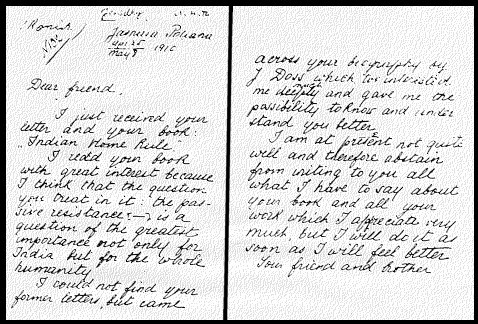
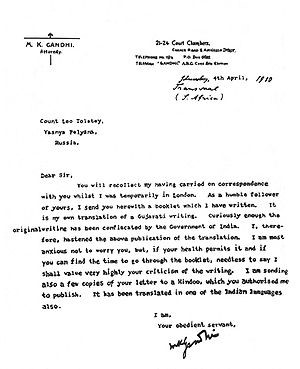
Mahatma Gandhi promoted non-violence (Ahimsa) as a method of protest against the occupation of East India Company in India. Many people ask questions that from which religion or text/s Gandhi got this concept of Ahimsa or non-violence. Though he was much influenced by reading of western texts and the Bible, he would not want to borrow an idea from the religion of the rulers of British Empire in India. There are interesting popular stories about the correspondence between the famous novelist Leo Tolstoy and Mohandas K Gandhi.
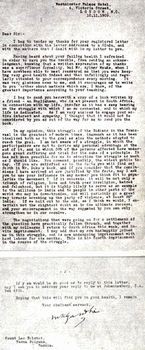
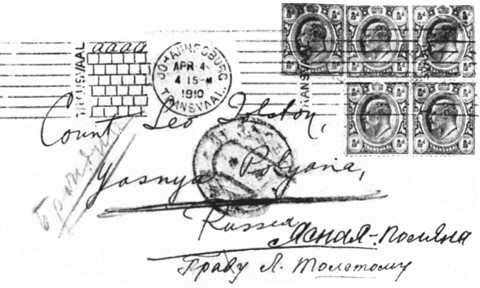
These letters were written in 1909. I wish to introduce Gandhi as Father of Our nation – India in spite of recent critical reflection of the oppressed communities on his approaches to marginal communities. However, for us we respect Gandhi while we also respect Ambedkar who is the symbol of India’s equality. As our interest is in Thirukkural, we will focus on the correspondence between Gandhi and Tolstoy. In his letters to Gandhi, Tolstoy refers to a letter that he wrote to The Hindu Newspaper, which was translated, from Russian to English. Gandhi wrote an introduction to this letter in the Hindu Newspaper.
In this letter to a Hindu, Tolstoy writes to Tarak Nath Das (1908) which was published in the Indian Newspaper –Free Hindustan. Gandhi asked permission for this letter to be reprinted in the South African Newspaper –Indian Opinion. In this letter, Tolstoy quotes Veda; John’s Gospel, teaching from Vivekananda and then also quotes particular references from Bhagavad Gita – of Krishna’s sayings. In addition to these quotes from various religious texts, he also quotes from Thirukkural. Tolstoy refers to Kural as a Hindu Kural.
The aim of the sinless One consists in acting without causing sorrow to others, although he could attain to great power by ignoring their feelings.
The aim of the sinless One lies in not doing evil unto those who have done evil unto him.
If a man causes suffering even to those who hate him without any reason, he will ultimately have grief not to be overcome.
The punishment of evil doers consists in making them feel ashamed of themselves by doing them a great kindness.
Of what use is superior knowledge in the one, if he does not endeavour to relieve his neighbour’s want as much as his own?
If, in the morning, a man wishes to do evil unto another, in the evening the evil will return to him.
The Hindu Kural (referring to the Tamil language classic couplet verses, Thirukkural).
He then goes on to interpret the text in the following quote. He makes a case for responding to all forms of violent oppression with love. He raises this as a value from Buddhism, Brahmanism and Christianity.
“Thus it went on everywhere. The recognition that love represents the highest morality was nowhere denied or contradicted, but this truth was so interwoven everywhere with all kinds of falsehoods, which distorted it, that finally nothing of it, remained but words. It was taught that this highest morality was only applicable to private life – for home use, as it were – but that in public life all forms of violence – such as imprisonment, executions, and wars might be used for the protection of the majority against a minority of evildoers, though such means were diametrically opposed to any vestige of love. And though common sense indicated that if some men claim to decide who is to be subjected to violence of all kinds for the benefit of others, these men to whom violence is applied may, in turn, arrive at a similar conclusion with regard to those who have employed violence to them, and though the great religious teachers of Brahmanism, Buddhism, and above all of Christianity, foreseeing such a perversion of the law of love, have constantly drawn attention to the one invariable condition of love (namely, the enduring of injuries, insults, and violence of all kinds without resisting evil by evil) people continued -regardless of all that leads man forward – to try to unite the incompatibles: the virtue of love, and what is opposed to love, namely, the restraining of evil by violence. And such a teaching, despite its inner contradiction, was so firmly established that the very people who recognize love as a virtue accept as lawful at the same time an order of life based on violence and allowing men not merely to torture but even to kill one another.”
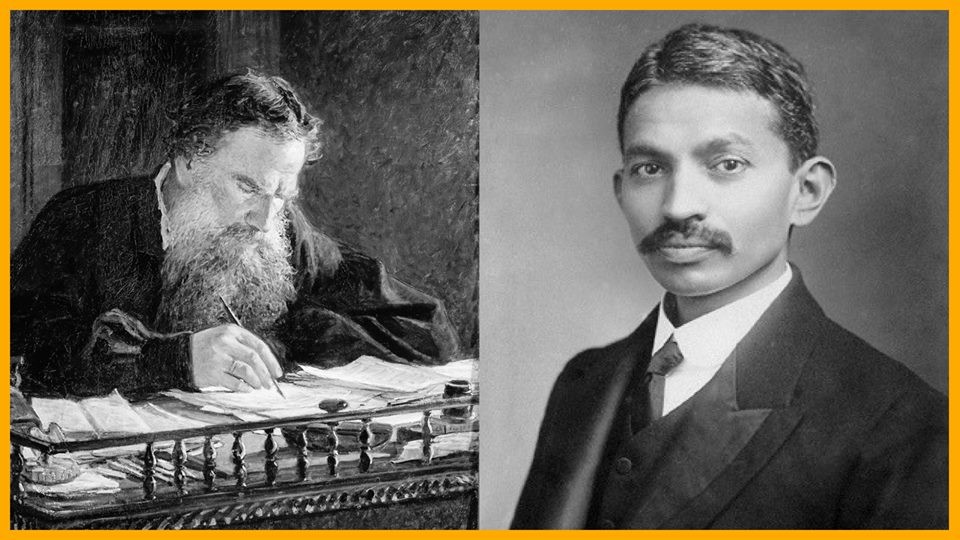
Therefore, the basic argument Tolstoy was making is to explore possibilities of responding the violence with the virtue of love. Interestingly he quoted the German translation of Thiruvalluvar, which he read and quoted to Gandhi. For Tolstoy only through the principle of love Indian people could free themselves from Colonial British Rule. Therefore, a non-violent application of the law of love through peaceful protests could be the alternatives for violent revolution.
Many have made a big case that Tolstoy has made a huge impact on Gandhi’s approach to freedom. Particularly Tolstoy’s book The Kingdom of God is within You along with his letter led Gandhi to choose non-violence as means of achieving freedom for India. We must argue the fact that the concept of Ahimsa was already part of Jain’s religious faith, texts and practices. Greater concepts of Ahimsa, if we translate it as non-violence, were well present in Bhagavad Gita, Upanishads and in Vedas. Even the idea of love as well quoted by Tolstoy himself were very much part of the Hindu teachings and texts.
Gandhi also worked among Tamils in South Africa where he might have been introduced by a person known as Ratnamalai. Gandhi might have learned a few Tamil words there and read the translations of Thirukkural. Whether his interest in Thirukkural came after Tolstoy’s letter or Gandhi was aware of Thirukkural before through the Tamils in South Africa, no one has established it clearly. Gandhi has certainly praised Thirukkural in his own words.
“A textbook of indispensable authority on moral life[1]“
“The maxims of Valluvar have touched my soul. There is none who has given such a treasure of wisdom like him.”
“We may not all be aware even of the name of Sage Thiruvalluvar. North Indian people certainly do not know his name. Few saints have given to the people as much knowledge as he has done in the minimum of words[2].”
Thirukkural is gnomic poetry, the greatest in planned conception and force of execution ever written in this kind.” (Sri Aurobindo, Indian nationalist, philosopher, yogi, and poet, 1872–1950)
“Thiruvalluvar is rightly considered as Chef d’oeuvre of both Indian and world literature. This is due not only to the great artistic merits of the work but also to the lofty humane ideas permeating it which are equally precious to the people all over the world, of all periods and countries.”[
(Alexander Piatigorsky, Russian philosopher, 1929–2009)
“There hardly exists in the literature of the world a collection of maxims in which we find so much of lofty wisdom…With sure stroke, the Kural draws the ideal of simple ethical humanity. On the most varied questions concerning the conduct of man to the world its utterances are characterized by nobility and good sense.”
Whilst Bhagavad Gita in a forced and chilly manner gives as a motive for remaining in active life that it is in accordance with the order of universe, the Kural justifies it – what an advance – by the idea of ethical activity. Work and profit place a man in a position to do well. According to the Kural, duty is not contained as in the Bhagavad Gita to what the caste calling involves but consists in general in ‘all that is good’. (Albert Schweitzer, French-German theologian, organist, philosopher, and physician, 1875–1965)
“The ideas of great Saint Thiruvalluvar will apply not only to India but the whole world.” (Rabindranath Tagore, Indian poet, 1861–1941)
“The Kural owes much of its popularity to its exquisite poetic form. The brevity rendered necessary by the form gives an oracular effect to the utterances of the great Tamil ‘Master of Sentences’. They are the choicest of moral epigrams. Their resemblance to gnomic poetry of Greece is remarkable as to their subjects, their sentiments and the state of society when they are uttered. Something of the same kind is found in Greek epigrams, in Martial and the Latin elegiac verse. There is a beauty in the periodic character of the Tamil construction in many of these verses that read minds, the reader of the happiest efforts of properties.”
“He was undoubtedly one of the great geniuses of the world. Complete in itself, the sole work of its author (the Kural) has come down the stream of ages, absolutely uninjured, hardly a single various readings of any importance being found. In value it (Kural) outweighs the whole of the remaining Tamil Literature and is one of the selected numbers of great works which have entered into the very soul of a whole people and which can never die.” (George Uglow Pope, Christian missionary to India, 1820–1908)
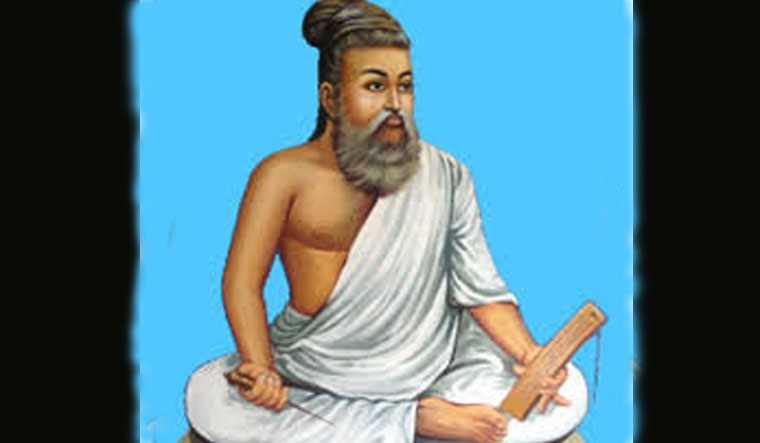
Though many scholars and religious leaders have endorsed Thirukkural, it is the content of the kurals that make a strong impression on anyone who reads. The Kurals bring universal and ethical principles in two poetic lines. There are similarities with other religious texts in terms of ethical approaches, particularly with Biblical values. Some of the local concepts such as the concept of rebirth; the idea of castes; the concept of looking at the self and the names of God are much localized yet Thirukkural’ s ethical principles are universally relevant. This book is an attempt to introduce Thirukkural as the Fifth Gospel because as you will start reading the content will start look like a follow up gospel of John the fourth gospel in the New Testament. Even though this gospel is not written or taught by Jesus or his followers, nevertheless, most of the teachings and principles are similar or the same as that of the four gospels in the New Testament.
In this book each couplets have two lines with four ‘ceers’ in the first line – a ceer is a combination of two Tamil words and three ceers in the second line. Thirukkural has 133 chapters with each chapter has ten couplets. The word, Thiru means honorable, respectable, or revered and Kural means couplets. Thirukkural is divided into three sections – first section is known as Aram – Virtue based Kurals; Porul – Wealth or polity based Kurals and inbam – Love based Kurals.
I certainly agree with some researchers and scholars that Thirukkural possibly was written in the Christian era and so does not belong to Sangam period[3]. Thirukkural is also known by other names: முப்பால் (Muppāl) – “The three-sectioned” or “The three-fold path” (Original name given by Valluvar); பொய்யாமொழி (Poyyāmoḻi) – “Statements devoid of untruth”; உத்தரவேதம் (Uttharavedham) – “Highest Veda”[; வாயுறை வாழ்த்து (Vāyurai Vāḻttu) – “Truthful utterances”; தெய்வநூல் (Teyvanūl) – “The holy book”; பொதுமறை (Potumaṟai) – “The universal Veda” or “Book for all”; தமிழ்மறை (Tamiḻ Maṟai) – “The Tamil Veda”; முப்பானூல் (Muppāṉūl) – “The three-sectioned book”; ஈரடி நூல் (Iradi ṉūl) – “The two-lined book”; வள்ளுவம் (Valluvam) – “Valluvarism” or “The work of Valluvar”. Thirukkural is translated into 37 languages. Thirukkural was written with universal ethics communicating moral and practically attitude towards life. Thirukkural cultivates one’s mind to receive bliss in the present life itself. At times Valluvar composed contradiction as to expond the virtues. Rajaji commented, “It is the gospel of love and a code of soul-luminous life. The whole of human aspiration is epitomized in this immortal book, a book for all ages. Mahatma Gandhi, who took to studying Tirukkural in prison, called it “a textbook of indispensable authority on moral life” and went on to say, “The maxims of Valluvar have touched my soul. There is none who has given such a treasure of wisdom like him. In this book, I will try to highlight he stanzas and their interpretation. A few have argued that Thirukkural has borrowed from other religious and non-religious texts and concepts. Thirukkural has many important ethical, communal and charity values that everyone of us should know, particularly Christians should realize. For me Thirukkural need to be read alongside the Bible so that children realize the contextual meanings and relevance of the Gospel in Today’s world.
[1] Rajaram, M. (2009). Thirukkural: Pearls of Inspiration. New Delhi: Rupa Publications.
[2] Rajaram, M. (2015). Glory of Thirukkural. 915 (1 ed.). Chennai: International Institute of Tamil Studies.
- [3] Linguist Kamil Zvelebil is certain that Tirukkuṛaḷ does not belong to the Sangam period, and dates it to somewhere between 450-500 CE. His estimate is based on the language of the text, its allusions to the earlier works, and its borrowing from some Sanskrit treatises. Zvelevil, K. (1962). Foreword. In: Tirukkural by Tiruvalluvar (Translated by K. M. Balasubramaniam). Madras: Manali Lakshmana Mudaliar Specific Endowments. 327 pages.
 Peace, Relations, Faith